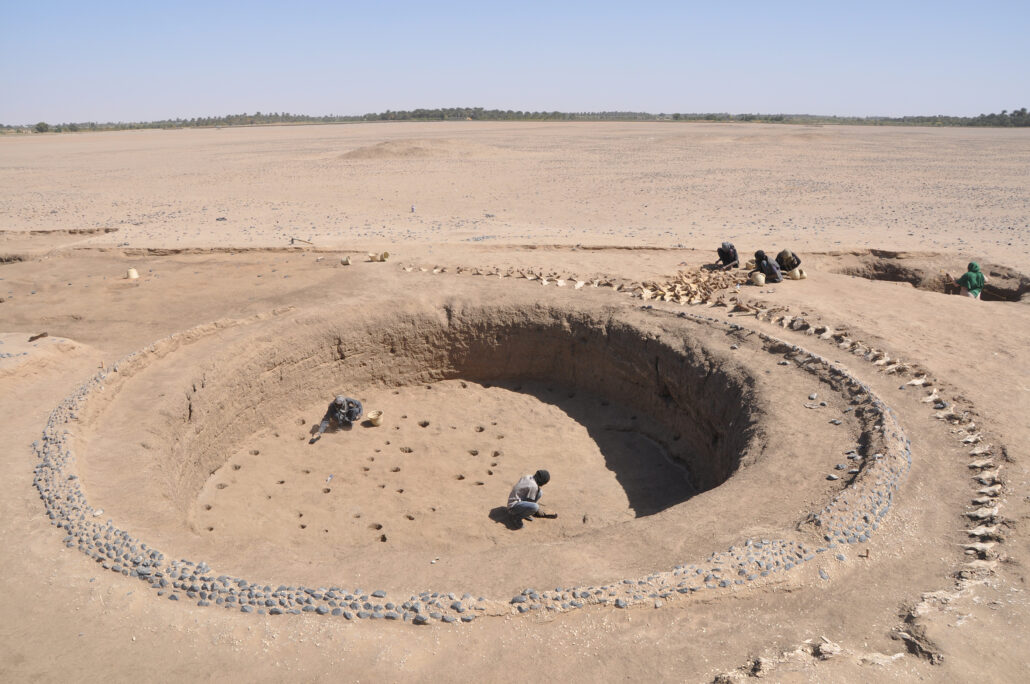
Swiss archaeological excavations at Kerma: The origins of the first Nubian kingdom
Apéro-Archéo
Thursday 25 September - 19h
By Matthieu Honegger, Professor at the University of Neuchâtel
For more than thirty years, archaeological research at Kerma, on the banks of the Nile in southern Egypt, has provided a better understanding of the history of this region and its societies. Excavations have brought to light the development of a powerful kingdom, organized around two major sites: a vast capital of over 20 hectares and its royal necropolis.
The first major center of power in southern Egypt, the Kingdom of Kerma prospered for almost a millennium. Controlling the trade routes of the Nile Valley, it established itself as a key player and a genuine rival to the Egyptian Empire.
Apéro-Archéo, a convivial get-together to explore an ancient theme. Archaeologists share their passion at the Roman Museum in Nyon, during a lecture followed by a discussion over a drink and an aperitif.