Living in a Roman house
What could be more topical than dealing with living in a Roman house in our age of confinement? Just as today, there are many different living spaces. Domus, insula and villa are three Latin terms that designate different types of dwelling, depending on whether you’re in the capital (Rome), the city or the countryside, and on your finances.
Inward-looking living
The traditional Roman house is called a domus. The Roman architect Vitruvius wrote a treatise on architecture in the 1st century B.C., detailing its characteristics. Quadrangular in plan, it is built around a square, open-air space called the atrium, which distributes the various rooms and is the main source of light for the household. From the outside, few ground-floor windows reveal the elegance and size of the interior.
The domus is the business of the master of the house(dominus): the pater familias, and the people who live with him (his wife, children and servants). The owner of such a house generally had a large fortune and managed his property. Manual labor was reserved for slaves and the lower classes of society.
Public area
The dominus practices clientelism. Every day, he welcomes his customers into his home, who come to greet him and are rewarded for voting for him. They arrive at the front door, lined with stores on either side, and enter the house. On the mosaic-paved floor, it’s not uncommon to see Medusa or a dark-colored dog, if not a real hound, challenging visitors to some form of fraud! They walk along the corridor before arriving in theatrium, the ceremonial room of the public part of the mansion. They walk around theimpluvium, a small basin in the center of the atrium, which collects rainwater that falls from the roof through the compluvium (square opening in the middle of the roof). They pass in front of the domus‘ laraire, a small aedicula often in the shape of a temple, which is the site of domestic worship. Guests are received in the room visible from the moment they arrive, which is located opposite the corridor after theatrium. This room is called the tablinum. Thick curtains or wooden partitions may be used to isolate this important space for the master of the house, so that he can conduct his business away from prying ears. This is where the master of the house conducts his business, but also stores his family archives.
Private area
Once the services have been rendered, the master of the house leaves his guests and enjoys a frugal meal before heading off to the thermal baths. The activities of other family members are varied. The children are taught by their pedagogue, play and look after their pets (dogs, birds, etc.), while the women groom themselves with the help of their ornamenters for hairdressing and dressing. They go to the public baths, spin and weave wool and take care of the household economy.
The evening meal, the cena, was prepared by the slaves in the kitchen, often located at the back of the complex. This is the most copious meal of the day, and is served in the triclinium. This may open onto a small hortus – a utilitarian garden – or a peristyle, a larger ornamental garden decorated with basins, fountains, sculptures, etc. The dining room is U-shaped to accommodate beds so that guests can eat lying down, helping themselves at low tables in front of them. They drink wine, which they wash down with water. The room can be lit by free-standing candelabras. You can admire the polychrome or still-life walls and hear the birds singing. Once the meal is over, tradition dictates that you don’t pick up anything that has fallen to the ground. The dog roams freely around the house and enjoys feeding on his master’s leftovers.
The study of archaeological remains makes it possible to identify these spaces and the objects they contained, sometimes in an excellent state of preservation, as in the cities buried under the ashes of the eruption of Vesuvius in 79.
Multi-family housing
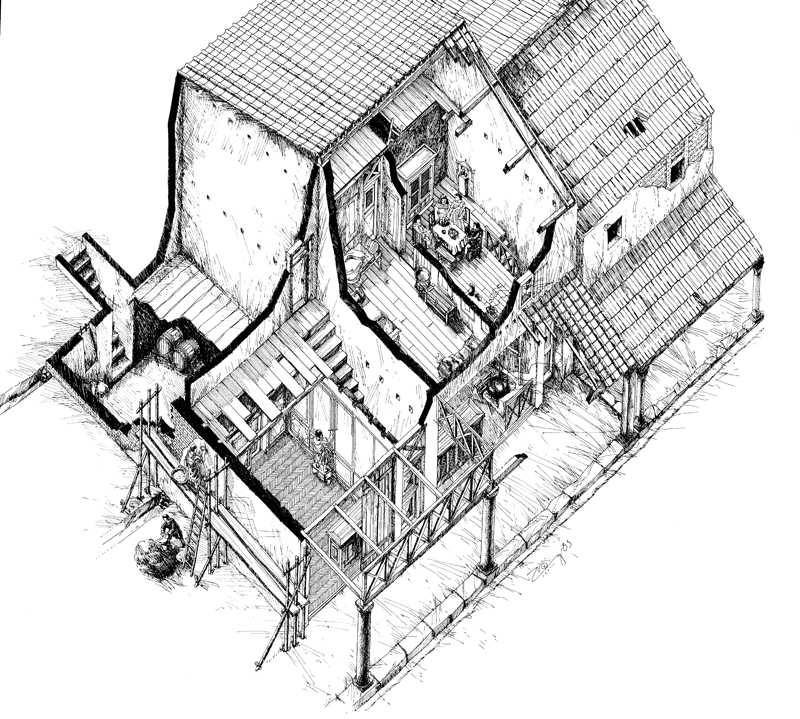
In Rome and Ostia, overcrowding and lack of space are driving up prices, and many people live in insulae, multi-storey dwellings, otherwise known as “cages-à-poule”. Often poorly constructed by profit-seeking speculators, some can reach up to thirty meters in height, and run the risk of collapsing due to lack of solidity and maintenance!
These dwellings are accessed by external or internal staircases that lead to apartments with just a few rooms, or even a single room, lit by small windows opening onto the street, with no supply of running water or latrines.
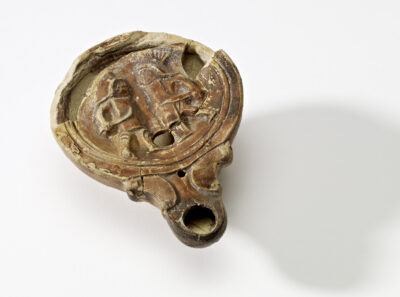
The infernal noise of the bakers and the nightly cart deliveries make it hard to sleep. Needs are taken care of in a chamber pot that has to be emptied! Other chores take place outside: fetching water from the nearest fountain, going to the public latrines and baths, and eating at the counter in small shops and bakeries. A small mobile brazier keeps you warm on chilly nights and winter days, and oil lamps help you find your way around the apartment after dark.
Suburban villas
Outside the city, the villae suburbia consisted of several buildings, a farm and its outbuildings, and surrounding farmland. But the Romans’ growing attraction to leisure pursuits led them to build pleasure homes close to Rome or in privileged locations to escape the sweltering heat of the city in summer. They could be equipped with even more rooms, dedicated to leisure activities, and the sunlight in these rooms was designed to suit the seasons.
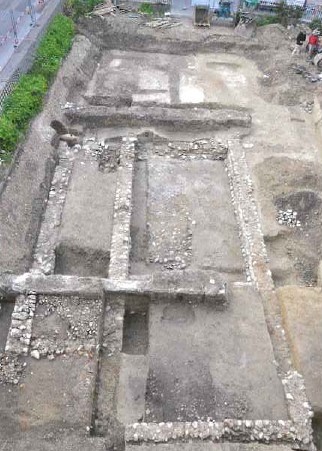
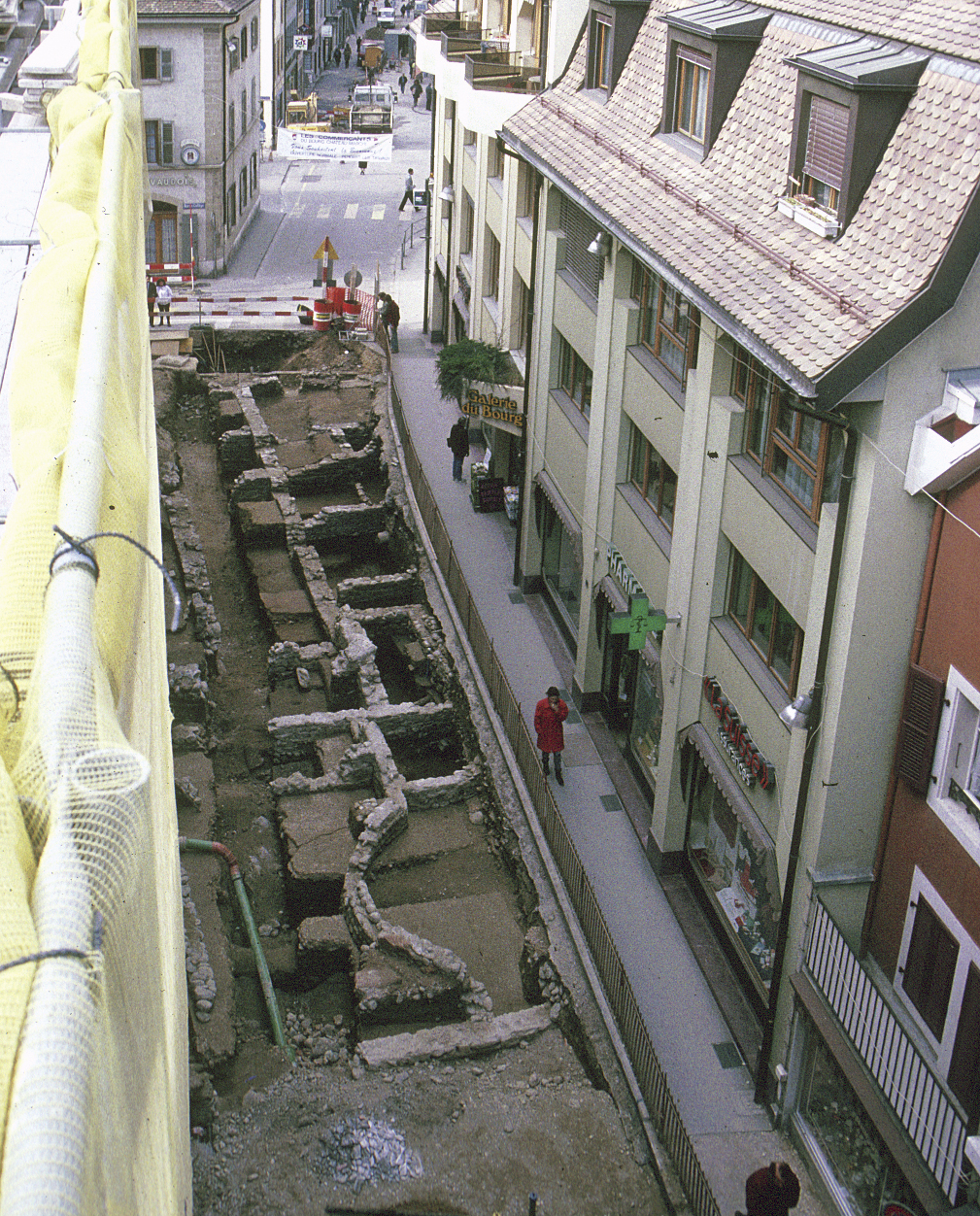
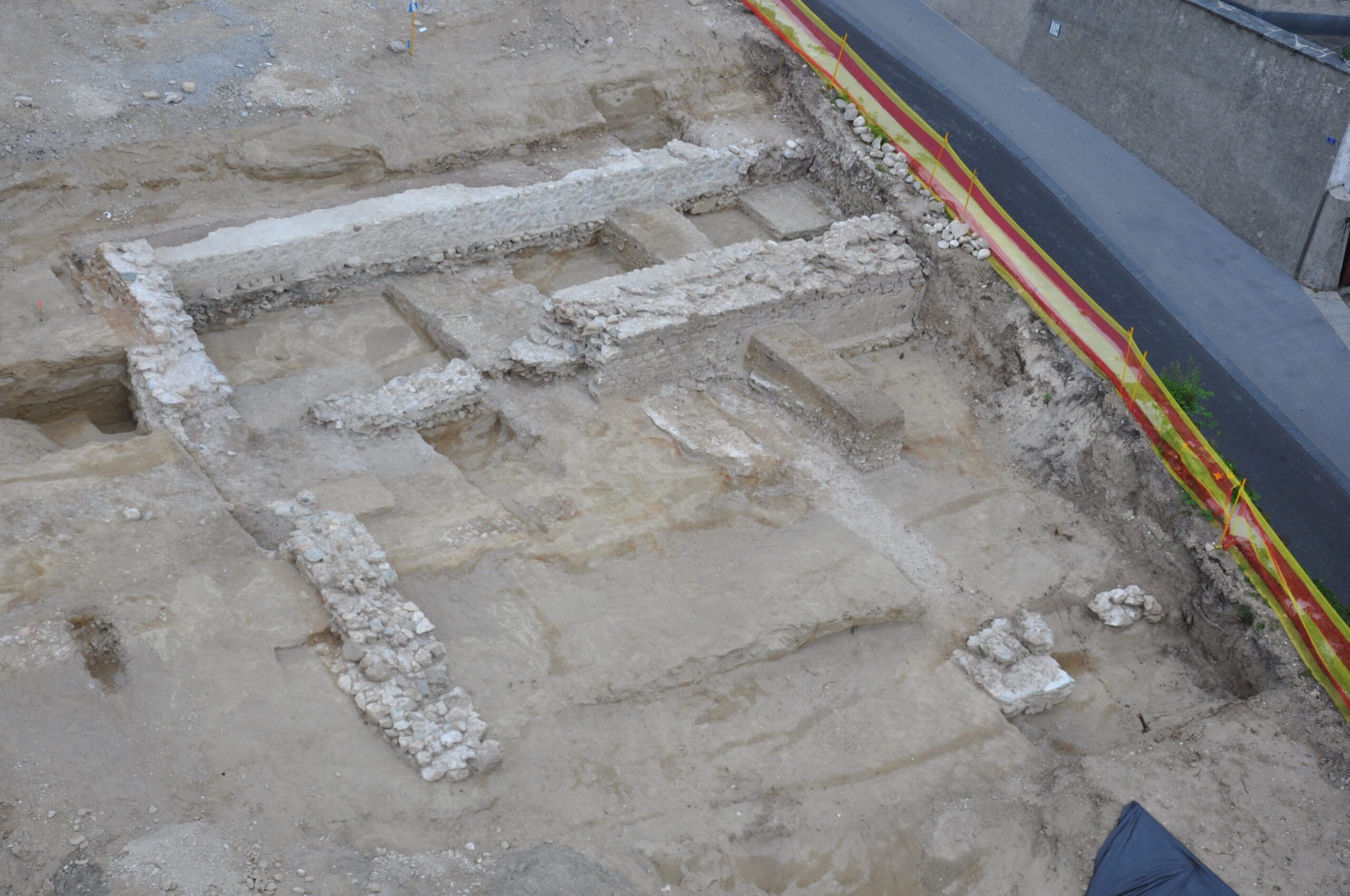
In our Romanized regions, customs are somewhat different. However, in Nyon, an insula at Place Bel-Air and domus at Rue de la Gare have identified areas of Roman settlement in the colony, from the1st to the3rd century A.D. Finally, suburban villae have been excavated on the surrounding hills and plateaus, giving them an unobstructed view of the lake and the Alps.
“Why do I often rejoin my little campaign of dry Nomente* and the poor lare of my field house? You ask? It’s because in the City (Rome), Sparsus (masculine noun), there’s no way to meditate or sleep. No life is possible with schoolmasters in the morning, bakers at night, and the hammers of boilermakers all day (…) “.
Martial, Epigrams, XII, 57
*The small town of Nomentum, now Casali di Mentana, lies in Lazio, some 20 km northeast of Rome, and was linked to Rome by the ancient via Nomentana (Chevallier 1997, p. 180-181; Radke 1972, p.146).