Being a woman in antiquity
Roman women
Under Roman law, women were born under the guardianship of their fathers. Once married, their status varied: a wife could remain her father’s ward or become her husband’s, depending on the matrimonial regime chosen. Women had no independence of their own.
Marriage was an essential element in the weaving of various family alliances, with the bride-to-be serving as a major asset. A young woman from a good family could influence the future husband’s career.
These customs evolved slightly over time. During the Augustan period (27 B.C. to 14 A.D.), in order to boost the birth rate, noblewomen who had had more than three children were offered freedom from guardianship. Freedwomen (former slaves) had access to this status after the fourth child, and slaves after the fifth. Finally, it was Emperor Claudius (41 AD to 54 AD) who abolished agnatic guardianship, which placed the entire family under the power of the pater familias.
By the2nd century AD, women could draw up their own wills and become heirs. They had the right to divorce and remarry, but if they committed adultery, they lost part of their inheritance.
It should also be noted that the status of women could have varied and adapted to different regions. Thus, what was valid for Italy could sometimes differ slightly in the provincial territories.
Despite their generally subordinate roles, women also held important positions in Roman society. This was particularly true of Vestals (priestesses dedicated to the goddess Vesta) and Flaminics (priestesses devoted to the cult of the empress). These priestesses thus fulfilled a first-rate public function, mainly honorary, and contributed to the prestige of their families.
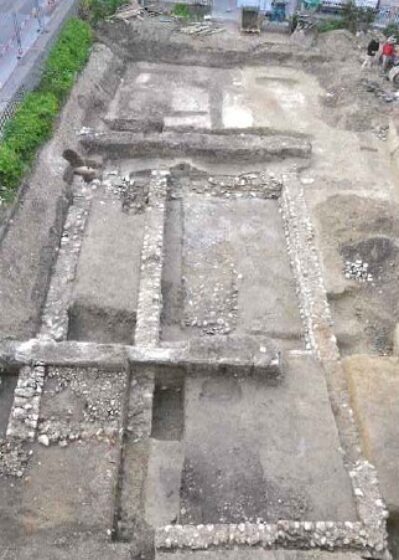
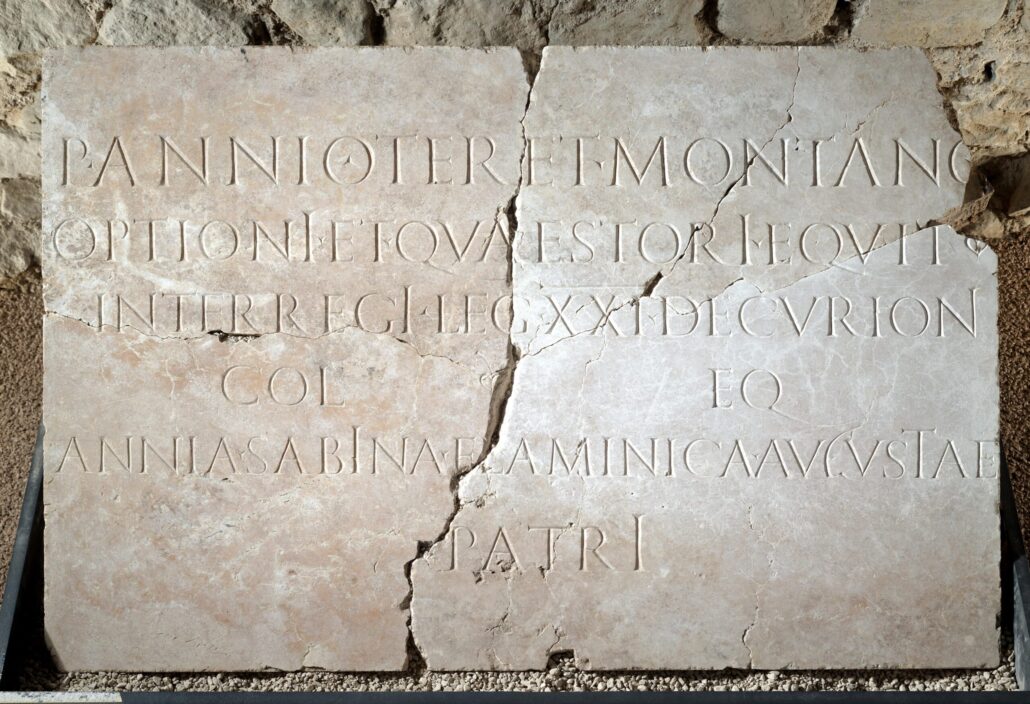
In Nyon, an inscription mentioning one of these flaminias, Annia Sabina, was found during excavations at the amphitheatre and can now be seen in the Roman Museum. The dedication was made by the priestess in honor of her father, a prominent figure in the colonia.
Apart from these honorary functions, we know relatively little about women’s professional activities, particularly those of more modest means. Generally the mistress of the household, it was the woman who worked the wool in the home, as attested by numerous reliefs and confirmed by weighing machines and other textile-working tools found in dwellings. Some women were midwives, while others would have worked as doctors, dentists or surgeons. There were also freedwomen or nurse-slaves who later became governesses. Slaves were also generally employed as domestic servants or in agricultural activities. Other wives certainly contributed to their husbands’ craft activities. Some women were also mentioned for their business acumen. And all this, of course, without forgetting the women who practiced the world’s oldest profession: prostitution.
Much of the evidence on the role and status of women comes from funerary stelae. These are often eulogistic, extolling the qualities of a daughter, mother or wife, summing up the primary role of a Roman woman. Sometimes, even, the virtues of the woman are overshadowed by those of a male relative, most commonly in the upper classes.
But there are also steles erected by a wife to her late husband, and vice versa, sometimes with more personal dedications testifying to a deep attachment and often mutual recognition within a couple.
Thus, the status of Roman women is relatively complex: although they were long under the tutelage of their husbands and lived in their shadow, there are many accounts of women who sought greater independence and recognition. We could also mention empresses such as Livia or Agrippina, who succeeded in positioning their son as emperor in order to retain a certain importance within imperial power. But these very exceptional cases above all confirm that the power of women from highly placed families was exercised primarily through intrigue.
Although dependent on their society and its norms, the traces left by these Roman women tell us that many of them did not wish to be confined to domestic duties.