Gladiators in Nyon
Testimonials from a lamp and a pearl
Amphitheaters were often majestic showpieces, whose architectural and ornamental decoration (statues, reliefs, marble veneers, frescoes, etc.) reflected the wealth of those who financed their construction. They were oval-shaped, with bleachers, so that the activities taking place in the arena could be seen from all sides. These buildings were used to stage very special shows, the best-known of which were the gladiatorial combats. The one in Nyon, of which only the arena and part of the stands have been preserved, was no exception, even if we have no direct evidence of the shows that took place there.
At the amphitheater, all strata of the population gathered together, even if they were separated according to their social status in the order of the stands. The organization of shows, free to all, was a privileged way for high dignitaries to gain popularity with the crowd and win favor with the people.
The people, for their part, looked forward to the exciting duels offered by gladiatorial combat. It was probably more the promise of spectacular combat than the thirst for blood that drew them to the amphitheatre. Contrary to popular belief, gladiatorial combat was governed by very strict rules, the application of which was monitored. In the arena, referees imposed penalties for the slightest breach of the rules. In fact, not all battles ended with the death of the defeated gladiator. In most cases, it was the surrender of one of the combatants that put an end to the show. The decision to grant him missio (grace), or to put him to death, was taken by the emperor or the organizer of the games. The people could influence the decision by cheering or booing the protagonists.
Gladiators embodied strength, courage in the face of death, bravery and honor: all Roman virtues “par excellence”. So admired and popular were they that some young Romans dreamed of becoming arena fighters. The expression of these typically Roman values in these fights was so popular with the common people and the ruling classes, that the latter expended considerable resources to provide them. Although gladiators were usually prisoners of war, slaves or convicted criminals, some were volunteers. By giving up their rights as free men, and provided they were physically fit, they could join a ludus (gladiatorial barracks). Gladiators were sportsmen of sorts, who received medical care and were subjected to a strict diet. Each victory brought them money, and they could hope to obtain their freedom after five years’ service, provided they survived until then.
For all that gladiators could represent inside the arena, outside it they were considered, along with actors, prostitutes and lanists(lanistae, gladiator masters), as “infamous”. As a result, they were pushed to the margins of society, deprived of legal, political and social privileges. This is the paradox of the gladiator: on the one hand, the image of the strong, courageous and adulated fighter in the amphitheatre, and on the other, that of a man excluded from society, a pariah deprived of rights.
The oil lamp
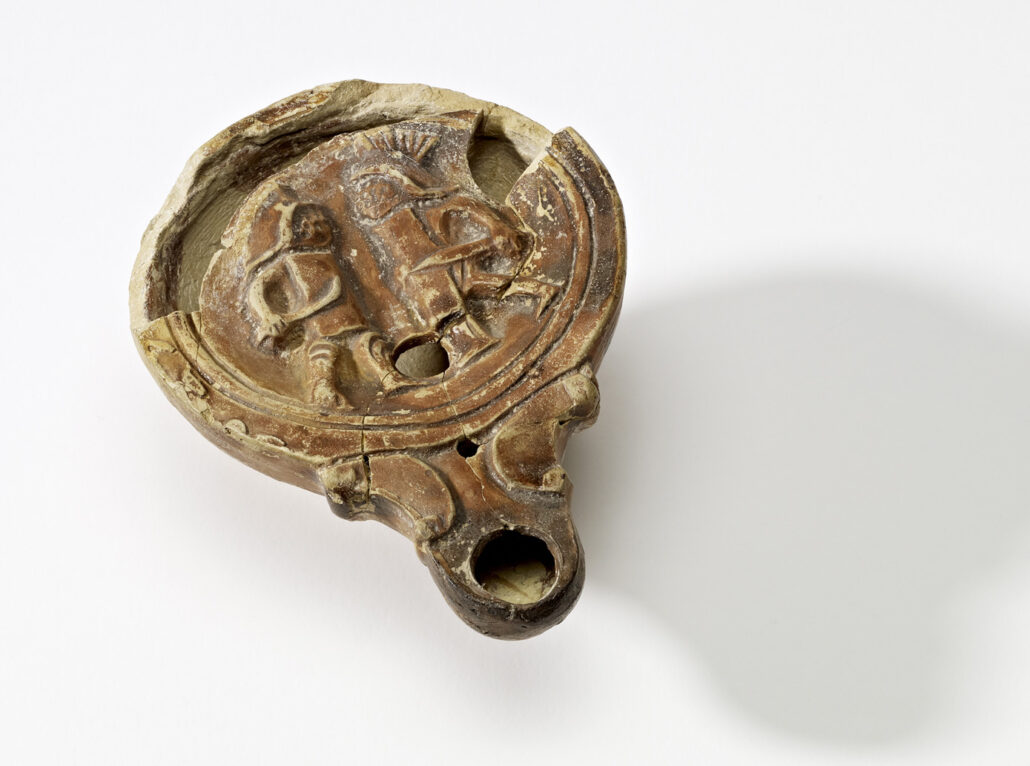
The first object we’ve chosen to present to you is an oil lamp discovered in Rue du Collège in 1901. Used to light the interiors of houses, often decorated with pictorial scenes, these lamps illustrate the tastes, preoccupations and trends of the Ancients. This one depicts a gladiatorial combat, a duel between a Thracian and a Mirmilian. There are six types of gladiator: the retiaire, the secutor, the mirmillon, the thracian, the hoplomaque and the provocator (see table below). Here, we can easily recognize the fighter on the left, thanks to the curved blade of the typical Thracian weapon. For the fighter on the right, it’s more difficult, as the mirmillon and secutor’s equipment are very similar. So how can we identify him? In fact, pairs of gladiators faced each other in strictly regulated duels, and we know that the Thracian fought exclusively against the Mirmillon.
| Gladiator type | Adversary |
| Retiary No helmet, no shield, net, trident, metal plate on left shoulder | Secutor |
| Secutor Rounded helmet to prevent the retiaire’s net from catching, large shield, short sword(gladius), leggings, protected arm. | Directory |
| Mirmillon Helmet, large rectangular shield, short sword(gladius), one protected arm and supporting leg | Thracian or Hoplomatian |
| Thrace Helmet, light shield, curved blade, single arm guard, padded tights and long leggings | Mirmillon |
| Hoplomaque Helmet, small round shield, spear, dagger, long leggings, single arm protection | Mirmillon |
| Provocator Helmet without rim and crest, large rectangular shield, short sword(gladius), one leg guard, the sword arm is protected. | Provocator |
The amber bead
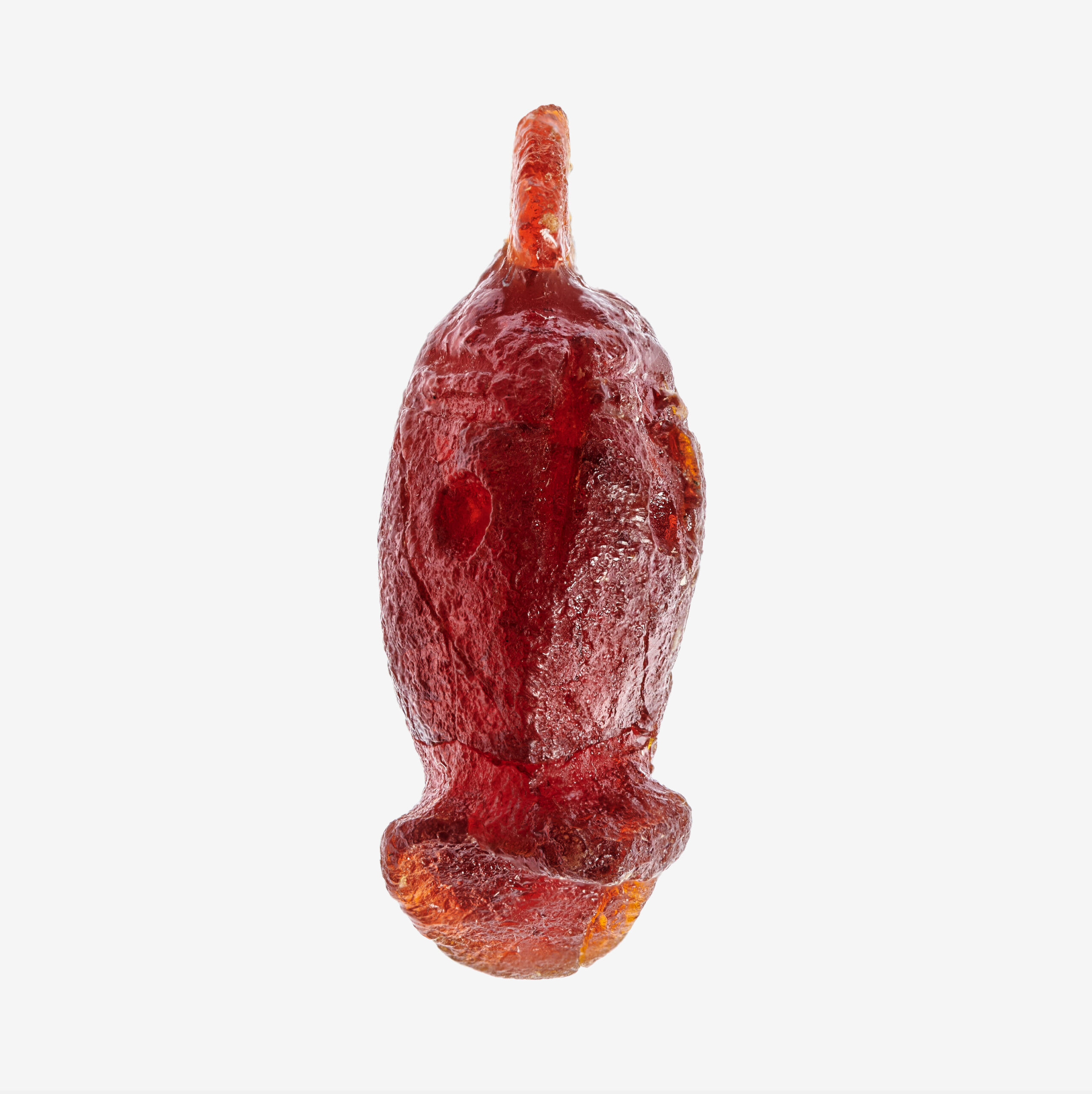
The second object is a small amber bead discovered in 2001 at Rue de la Porcelaine. The pendant depicts a gladiator’s head, a secutor according to the shape of the helmet. This magnificent piece of jewelry must have belonged to a resident of Noviodunum. Our sources clearly show that gladiators were fascinating and that women were not insensitive to their charms. Juvenal even recounts how the wife of a respected senator fell in love with a gladiator and left her husband and children to flee to Egypt with her lover (Juvenal, Satire, VI, 82-87).
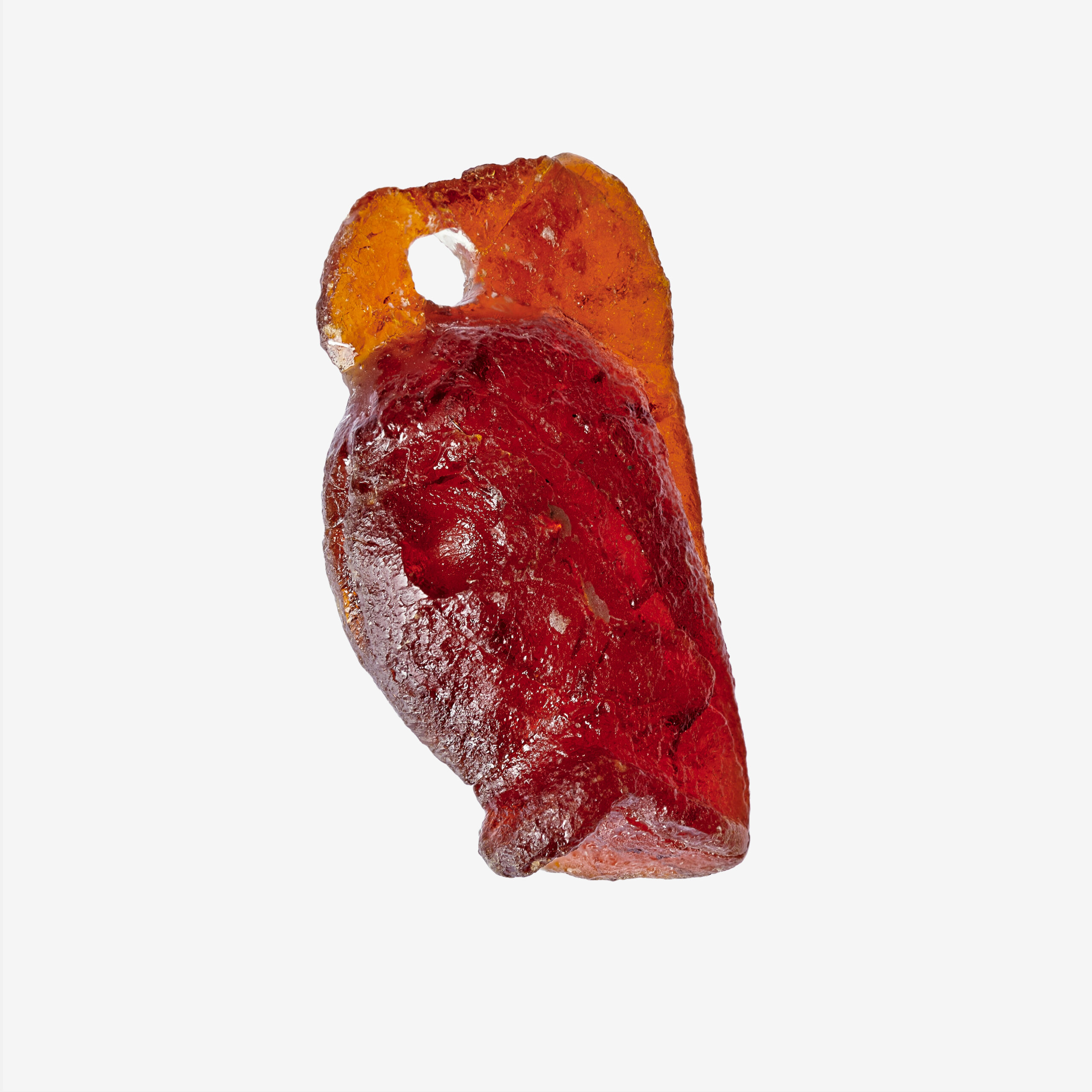
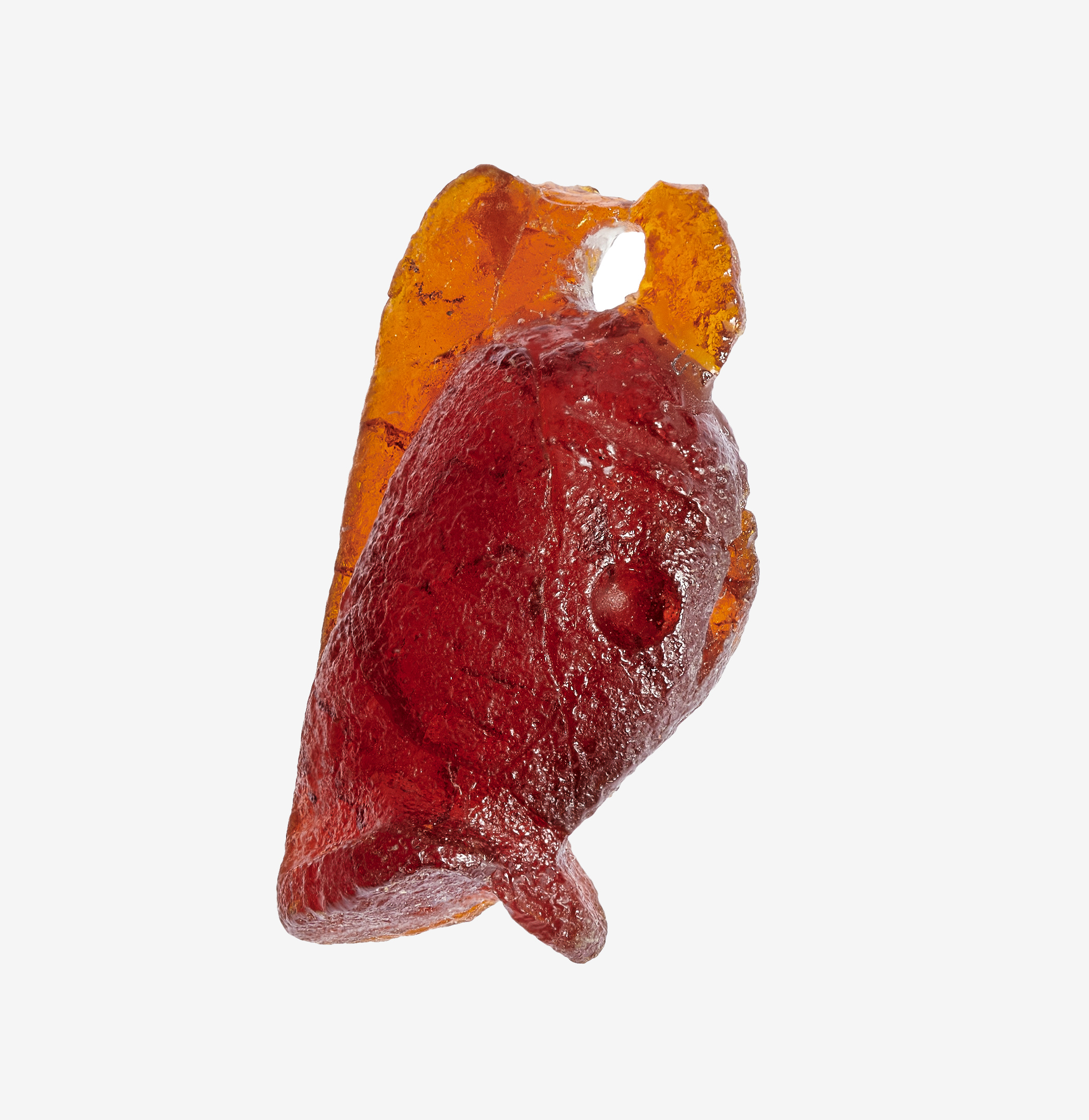
These two objects found in Nyon testify to the general renown of the amphitheatre’s shows and the popularity of the fighters among the inhabitants of Colonia Iulia Equestris. With this lamp and this little pearl, intimate objects of daily life, we are forging direct links with the former inhabitants of our town, beyond official and political testimonials, bringing us a little closer to their reality. And this is in keeping with Colonia Iulia Equestris‘ role as the image of Rome in the provinces.