The Duche statuettes
Unexpected statuettes
Apollo, Venus and Hecate, three deities, three bronze statuettes discovered in the Rive district of Nyon. What’s their story?
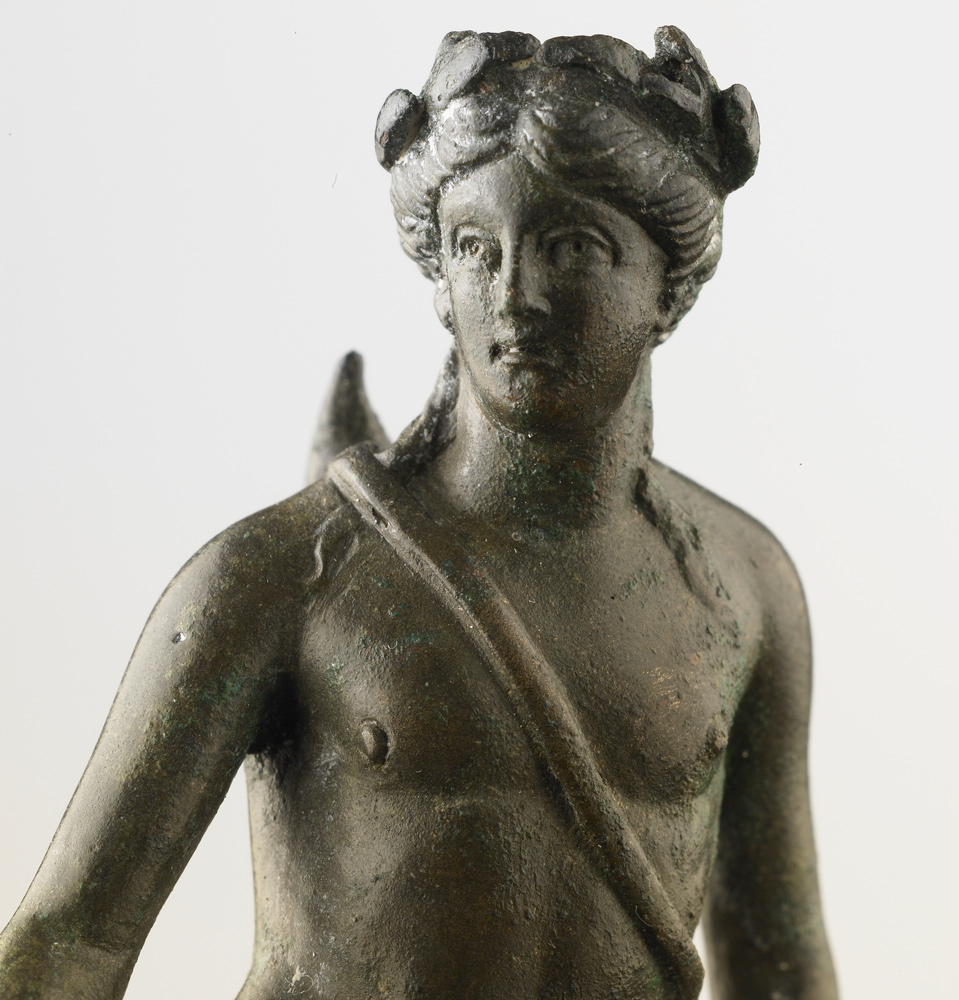
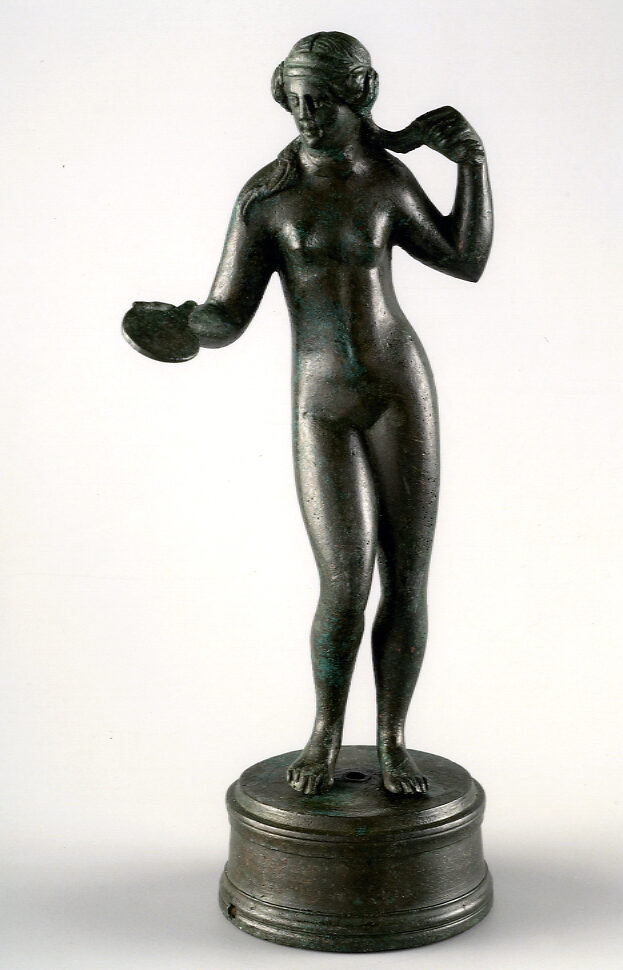
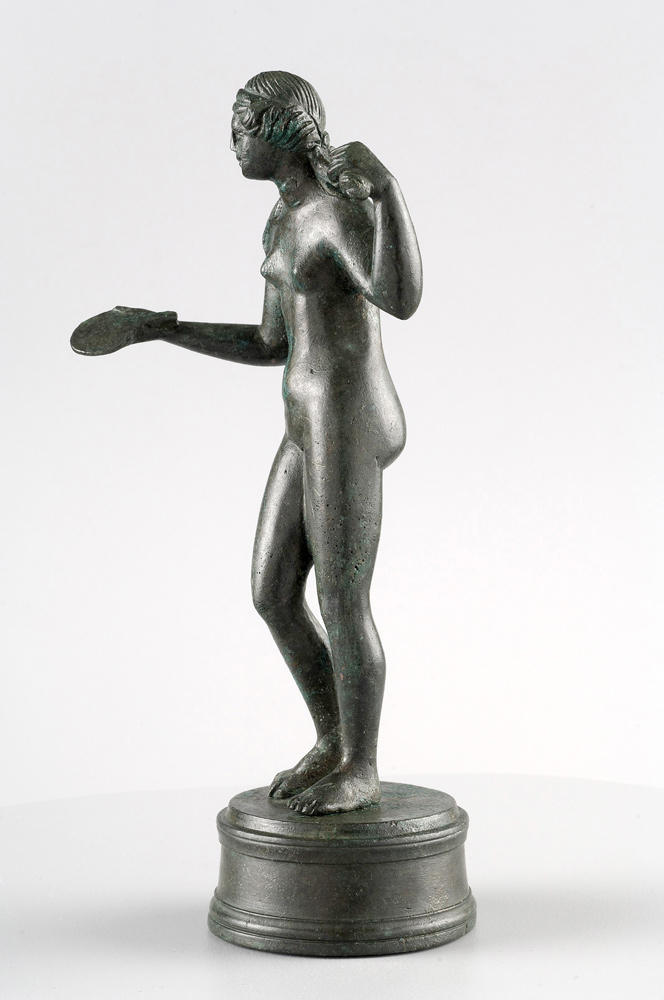
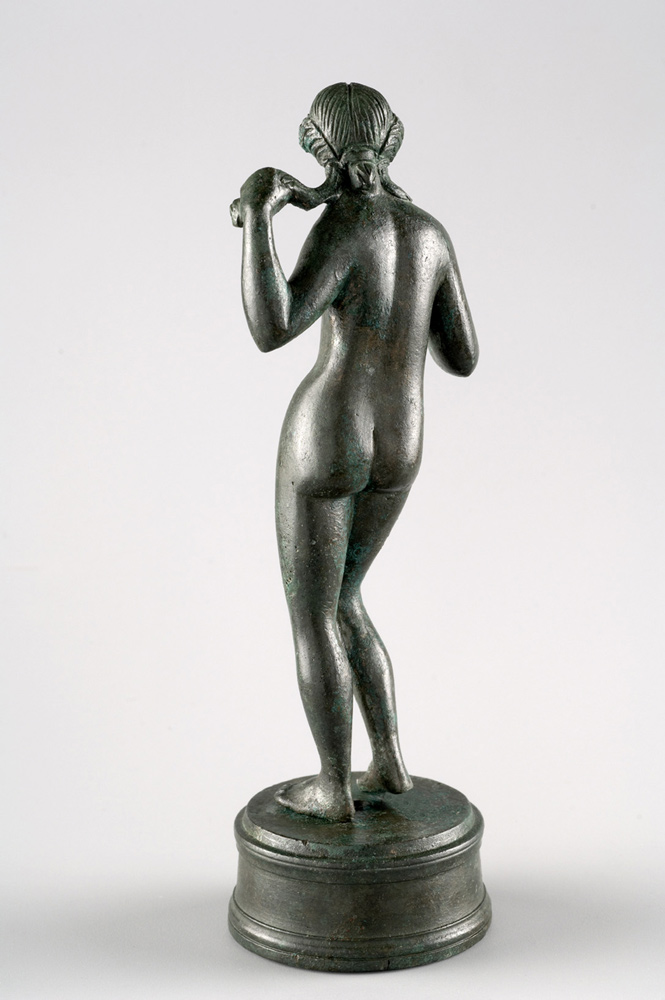
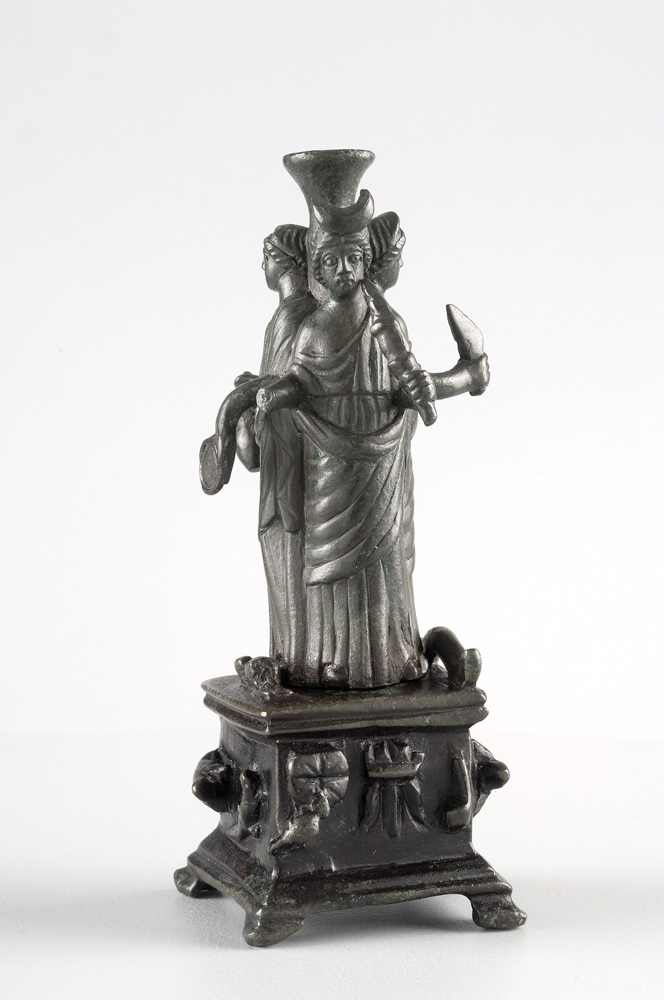
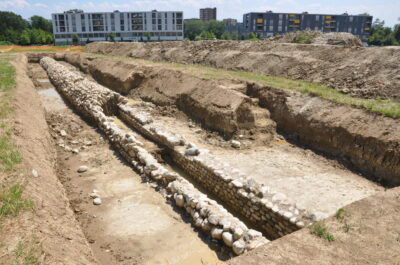
2005, work on the Duche underground parking lot is about to begin, but first archaeological excavations have to be carried out. We’re in Nyon, a former Roman colony, and the likelihood of discovering remains is very high. On the hillside overlooked by the Château de Nyon, a road, pipes and the outline of two buildings were created by the archaeologists’ trowels and pickaxes. In the demolition layer of a drain dating from the3rd century A.D., at the back of a richly decorated building, the greenish silhouette of a bronze statuette of Apollo appears, then that of Venus just below, and finally that of the goddess Hecate.
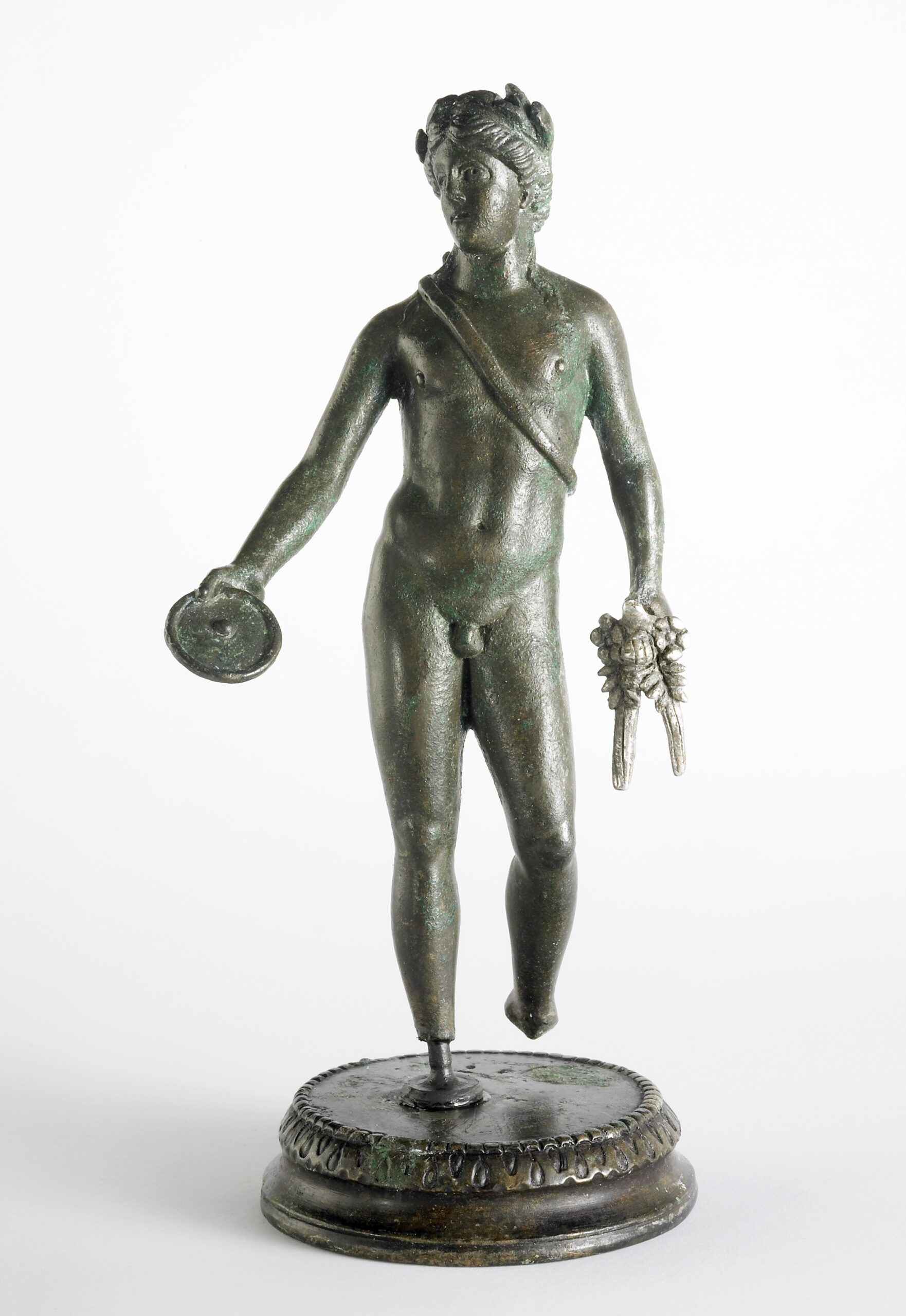
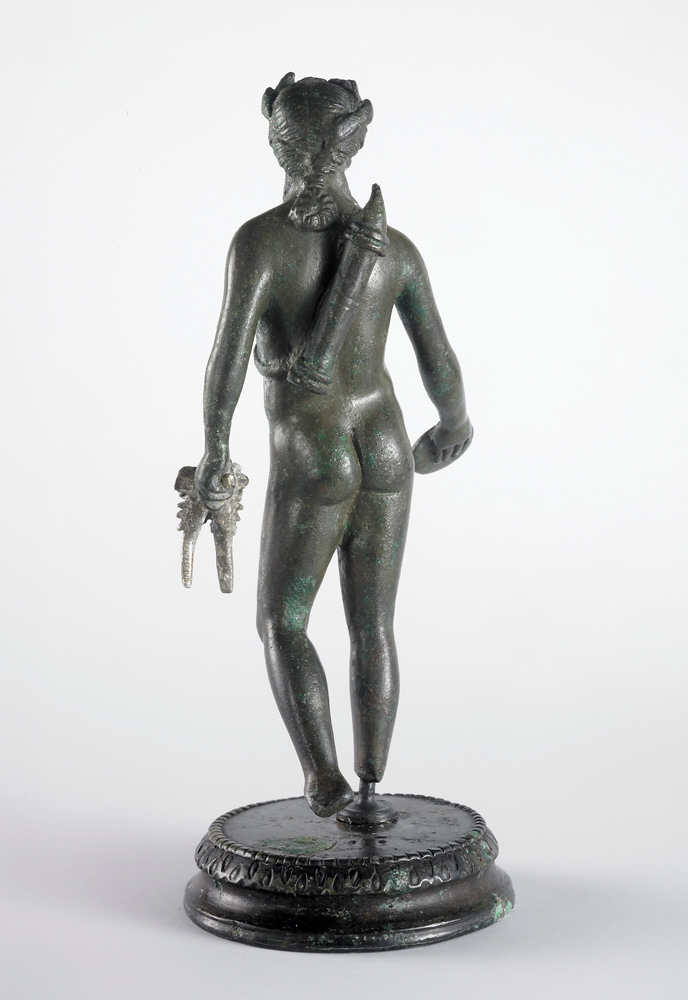
Apollo, the archer, shown naked, holds a patera in his right hand, a vessel used to present offerings to the deities, and a laurel bouquet in his left. A quiver hangs from his back. Archer, did you say? But then, where is his bow? The laurel branch is indeed a silver addition. It could indicate that the hand holding the bow had already been broken off and replaced by a hand holding the bouquet. But Apollo, god of the arts, reason and clairvoyance, is also known as the bearer of the laurel, a symbol of victory, and the choice of silver could simply indicate a desire to highlight this attribute.
Venus, goddess of love and beauty, is also depicted naked. In her right hand, she holds a mirror, and with her left, she places a lock of hair back on her shoulder, gestures still familiar to us 21st-century dwellers. Venus was very present in Roman Gaul. A large number of terracotta effigies have been discovered here, and Nyon is no exception. It is, however, much rarer in the form of a bronze statuette, and even rarer in terms of craftsmanship.
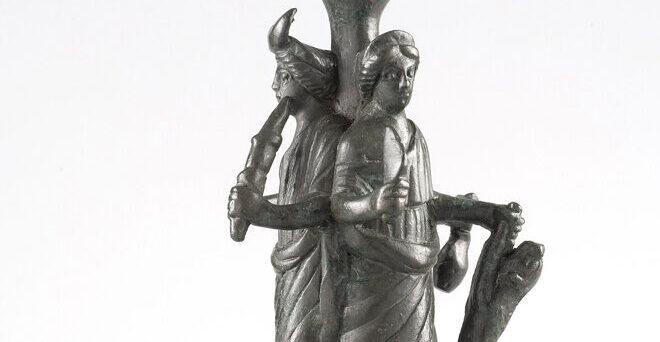
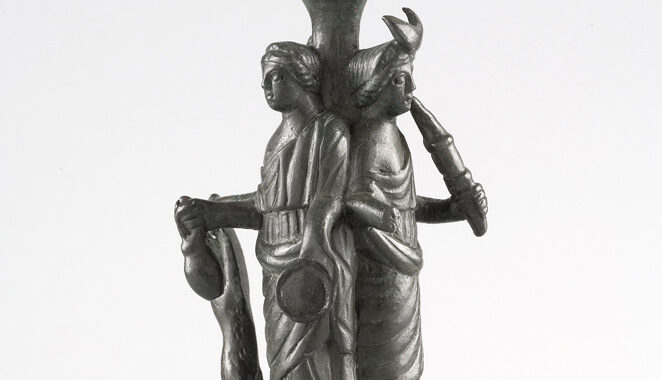
The goddess Hecate, originally from Thrace, in the eastern part of today’s Balkans, is very rare in our latitudes. All the more so in this triple-bodied form: three women leaning against a column, each looking in a different direction. One is preparing to sacrifice a dog, the other is carrying a jug and a patera for libations, while the last is brandishing a torch, a half-moon girded to her forehead. Around them, and on the base, are depicted objects and animals linked to her cult: snake, turtle and lizard, fruit, bread and a tree identified as a pine… all symbols linked to fertility. A goddess linked to the underworld, mystical magician and mistress of crossroads, the Hecate depicted on this figurine seems to symbolize a happier side: that of fertility and abundance.
The three Duche statuettes were obviously deliberately deposited in the drain, which must have been half-destroyed by the3rd century AD. At the time, such objects were generally displayed in a laraire, a small domestic altar found in every Roman dwelling. The deities depicted acted as guardians of the family and household in exchange for regular offerings.
Clues point to the identity of the statuette’s owner: given the statuettes’ fine craftsmanship, his family must have enjoyed a certain prosperity. Similarly, the presence of Hecate would seem to indicate that the owner was originally from the Balkans or a soldier who served on the Danubian frontier.
What are Apollo, Venus and Hecate doing in an abandoned sewer? Was it a hiding place to protect them from danger? Did their owner intend to recover them when he buried them? These are impossible questions to answer, but they do allow us to imagine a fleeting moment in the life of these objects, from the center of household attention to the oblivion of a sewer backfill.