The Nyon aqueduct
Water, the guarantor of life
Throughout history, people have always chosen to settle near water, whether for survival, agriculture, trade or protection. During the Roman period, water was sought after, venerated, channelled and even exhibited, and the colony of Nyon was no exception. Aqueducts, monumental fountains and thermal baths were emblems of the Empire’s know-how, wealth and exemplary lifestyle.
Romans went to the baths every day, to wash, chat with friends, relax, hold meetings, listen to gossip, play sports… These infrastructures required an enormous quantity of water; wells and cisterns were not enough, so special pipes, aqueducts, were built. In Rome, a densely populated city with numerous public baths and latrines (toilets), the precious resource was brought from the springs of Tivoli, 20 km away. By the3rd century AD, the capital had eleven aqueducts.
A specialized department, headed by the curator aquarum, water curator, and a large team (up to 700 employees) managed these pipes, their maintenance and the repression of fraud. The first curator was Agrippa, Augustus’ right-hand man, in 33 B.C. He built free public baths (a real event), aqueducts and fountains, and renovated facilities and sewers. It was a policy of public maintenance designed to beautify the capital, please the people and consolidate the power of the man who was to become the first emperor.
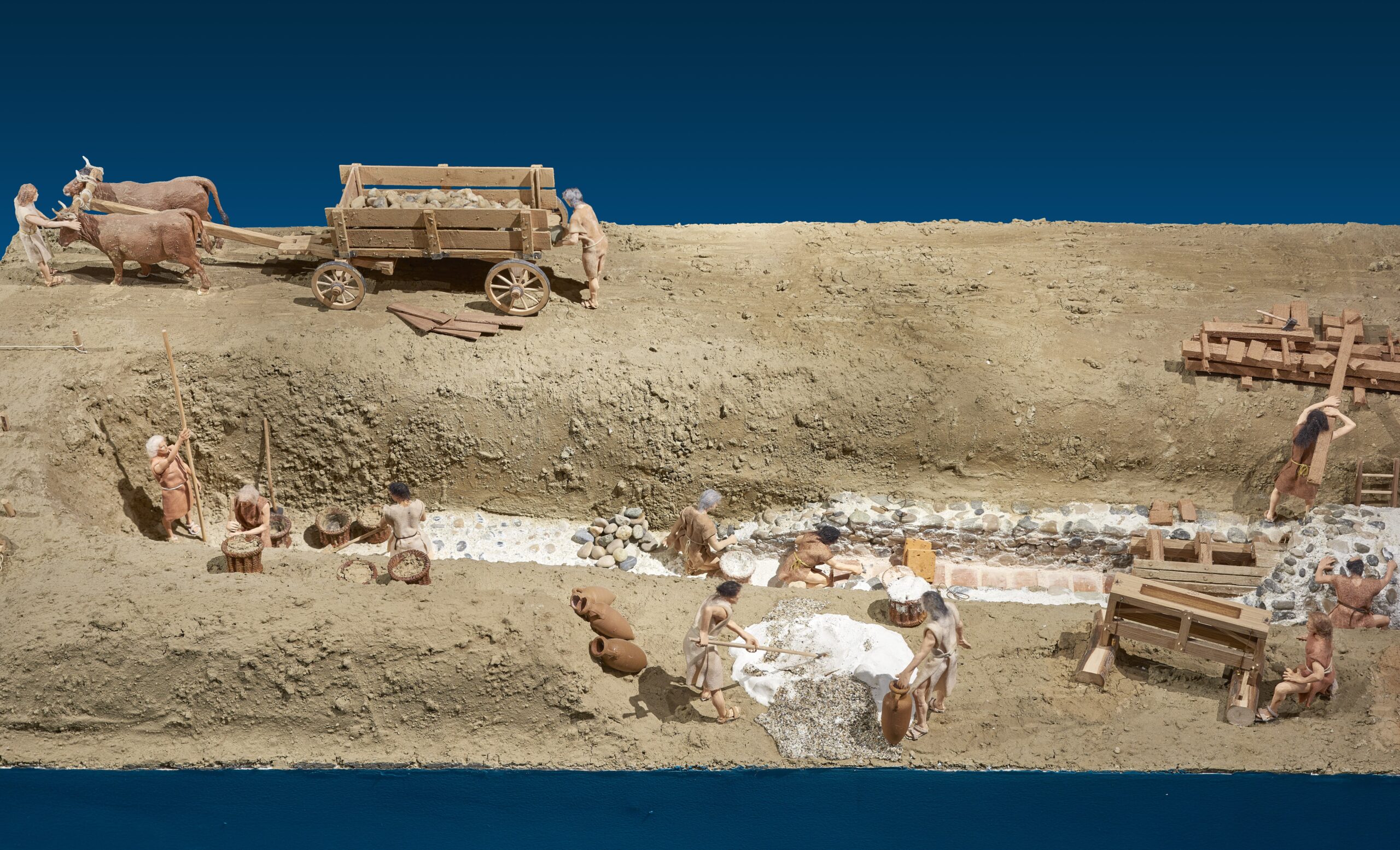
Colonia Iulia Equestris, the ancient city of Nyon, built in the image of Rome, most probably acquired its aqueduct in the 1st century A.D. Let’s take a look at this example, whose construction is shown on a museum model.
To build such a pipe, it was necessary to find a good-quality, abundant spring at a higher altitude than the town, to allow gravity flow. Nyon’s water was tapped ten kilometers further on, at Divonne-les-Bains (no, this is no coincidence).
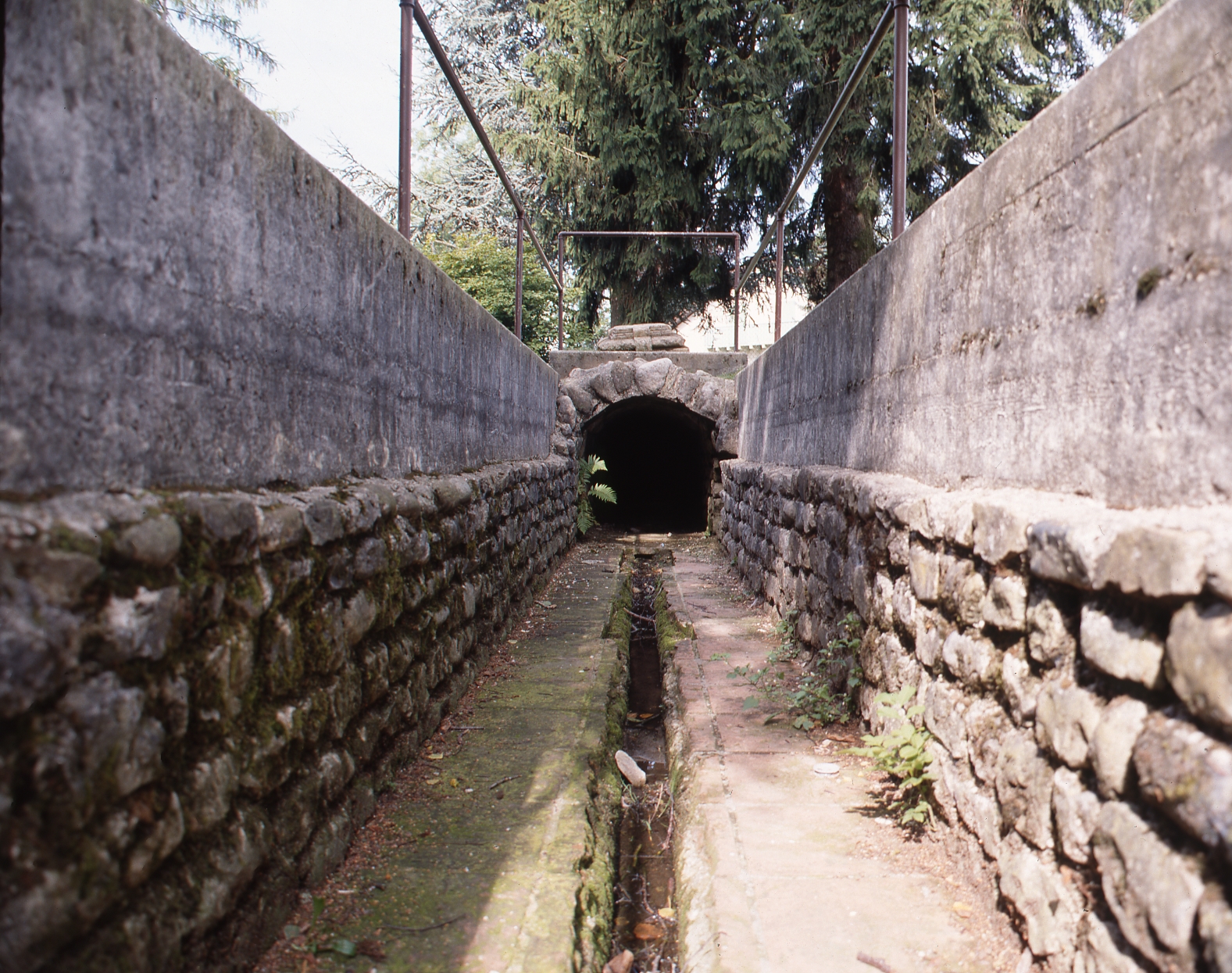
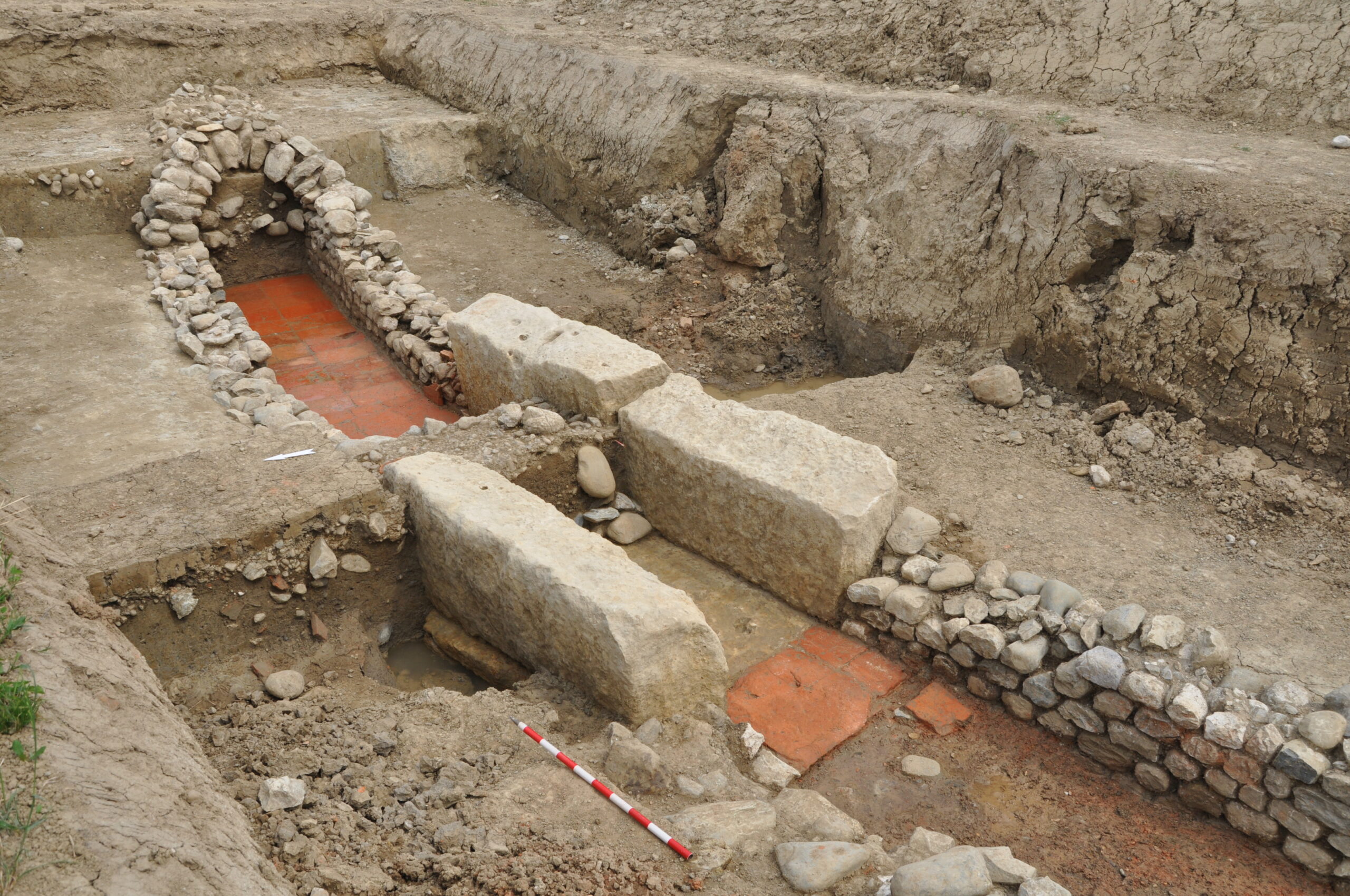
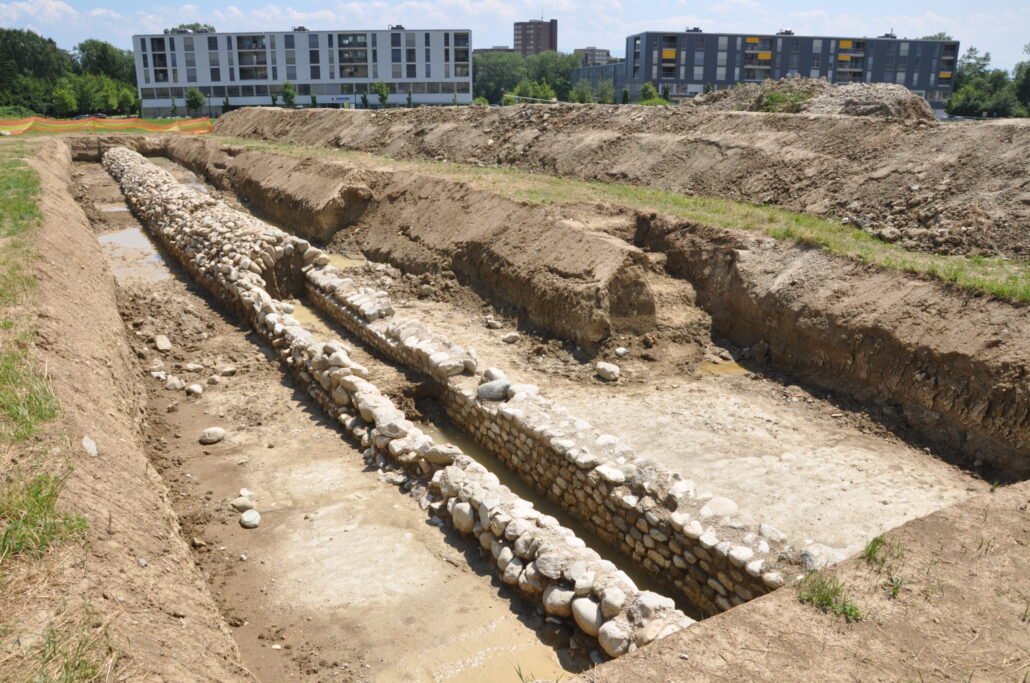
Several sections of the aqueduct were found during archaeological excavations in areas threatened with destruction by construction work. Although the structure of the aqueduct could not be left visible, its course is indicated by a line in the grass on the soccer pitch in the Cossy district.
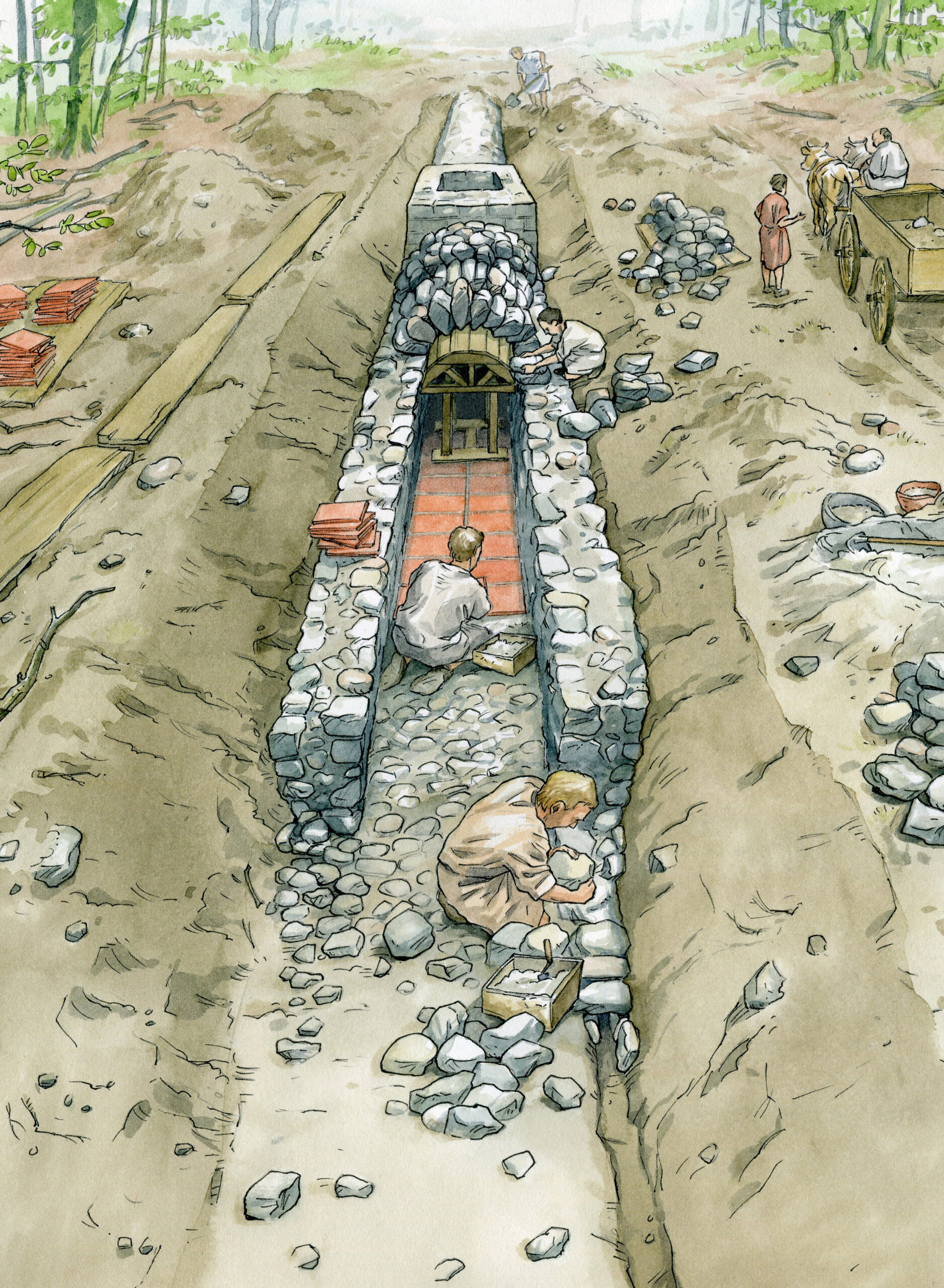
The pipe was buried some 50 cm below ground level. The water flowed over a tiled pavement covered by a vault (a typical feature of Roman architecture, allowing it to bear heavy loads). Arches and bridges (like the Pont du Gard) were long and costly to build. Aqueducts were best built underground (to protect the water from dirt, theft, freezing and evaporation).
The model shows workers bringing in stones, preparing tiles and mortar before building the structure. The model also illustrates the sort of shafts that once provided access to the pipe for cleaning and repair.
During its course, the slope was precisely calculated: steep enough to allow flow, but not too steep, to avoid excessive pressure that would weaken the construction. Traces of the aqueduct are lost after the present-day route de St-Cergue, but it must have reached the town in a water tower.
The water then went first to public fountains and latrines, then to thermal baths and industries, and finally to the homes of citizens who could afford private pipes and fees. Public fountains were also useful for fighting fires, a frequent occurrence in densely populated towns where lighting, cooking, heating and industry required fire.
In towns, pipes were often made of stone, wood or terracotta, as metal was expensive. The health risks associated with lead pipes were almost non-existent, since to cause a harmful reaction, the water had to stagnate in the pipes; however, aqueduct water flowed continuously, and limestone quickly settled in the pipes, insulating metal and water.
Finally, all this water had to be drained away, as the streets were flooded by the overflow from fountains and buildings. Drain pipes carried the wastewater to a large sewer. In Nyon, this pipe is still hidden beneath today’s Grand Rue. The final destination was Lake Geneva.
Sometimes, the most useful and remarkable structures are also the most discreet. The invisible underground aqueduct is proof of the skill of Roman civil engineering. It enabled cities to grow, as did the no less secret and effective sewage system that cleansed the city of its waste.
A Roman author wrote: “To the masses so numerous and so necessary of so many aqueducts, go and compare the pyramids, which obviously serve no purpose, or the works of the Greeks, useless but celebrated everywhere” (Frontin, de aquaeductibus urbis romae, XVI, 1). To understand this text, we need to know that its author, Frontinus, was curator of water in Rome, and that this treatise explained every aspect of his work. An authority on the subject, he was commissioned by the emperor to carry out this task, so he preaches for his parish.
Of course, aqueducts, baths, latrines and sewers helped the rise of civilization and the Roman Empire, improving daily life, hygiene, safety and industry. This culture has left its mark beyond Europe, influencing and impressing us to this day with its mastery in so many fields, and helping us to reflect on our own.